Yes, power outages can close schools after a winter storm when the building cannot maintain safe conditions, essential services or safe access. A brief interruption may not require closure if adequate safeguards remain available. The school or district makes the decision under its local procedures. Electricity coming back on does not, by itself, mean the school is ready to reopen.
For families in the United States and Canada, the key question is whether the school can safely care for students. An outage map explains electrical service; your school’s official announcement explains whether to attend.
Can a Power Outage Cause a School Closure?
Yes, but it is not automatic. A short interruption with usable classrooms and functioning safety arrangements is different from an extended outage that disables essential services. Possible responses include continuing classes, delaying the opening, dismissing early or closing for the day.
For example, Seattle Public Schools’ safety FAQ says instruction can continue during interruptions, with lesson changes where necessary. If its utility advises that an outage will be prolonged, the district may notify families of early release or cancellation. That is a local procedure, not a nationwide rule.
There is no single outage duration that answers “will school be cancelled?” for every school. A utility’s estimated repair time is one input; conditions inside the building and the school’s emergency plan also matter.
What Happens If a School Loses Electricity?
Schools may be able to operate without normal electricity for a limited time, depending on what still works. The following table explains the main concerns. It is a general planning guide, not a mandatory checklist for every jurisdiction.
| System | Potential problem | What matters |
|---|---|---|
| Lighting | Dark rooms, halls or stairs. | Usable spaces and safe movement. |
| Heating and ventilation | Controls, pumps or fans may stop. | Indoor conditions and equipment operation. |
| Water and toilets | Water service or sanitation may be disrupted. | Safe drinking water and working bathrooms. |
| Fire and emergency systems | Normal protection may be impaired. | Working alarms or locally approved safeguards. |
| Communication | Phones, internet or messaging may fail. | Ways to reach staff, families and responders. |
| Meals and student support | Kitchens or support equipment may be unavailable. | Safe meals and required student assistance. |
These concerns draw on the California Department of Education’s closure considerations and Boulder Valley School District’s outage guidance. California’s document addresses public safety power shutoffs; it is useful context, not a winter-storm rule for the whole country.
Backup power does not necessarily run the whole school
Boulder Valley explains that its generators support selected emergency functions, rather than normal full-day heating, classroom technology and kitchens. Other schools have different equipment. A generator on site therefore does not establish that all the services needed for a school day are available.
Can Schools Open Without Heating During Winter?
Loss of heating can lead to closure if safe indoor conditions cannot be maintained. Heating equipment may need electricity for controls or circulation even when electricity is not its main heat source. Ventilation equipment may also be affected.
Boulder Valley identifies building temperature and available support services among the considerations for operating briefly during an outage. A heating failure can also occur while lights remain on. The question is whether the occupied building remains suitable for students and staff.
Do not apply an outdoor wind-chill cutoff as an indoor classroom rule. Local requirements, the building’s condition and students’ needs govern the response; there is no single minimum classroom temperature covering every U.S. state and Canadian province. Travel is a separate concern, discussed in our guide to cold weather and school buses.
Can Schools Close Because of a Power Outage After a Snowstorm?
Yes. Infrastructure damage can outlast the snowfall. The Government of Alberta explains that freezing rain, wind and extreme temperatures can damage electrical infrastructure or strain supply. A grid alert signals supply pressure; it does not by itself prove that a particular school has lost power.
The National Weather Service’s post-storm guidance warns that icy roads, downed lines and other hazards can persist. A restored classroom light does not clear a blocked bus route or repair a damaged building. Stay away from downed power lines and follow local emergency instructions.
A verified example: Oregon’s January 2024 ice storm
Beaverton School District’s April 30, 2024 board packet records that the January ice storm caused power outages, impassable roads and school-facility damage. The district closed for three student days and dismissed early on another day. These were combined storm impacts, not evidence that every outage requires a multi-day closure.
Snowfall totals answer a different question. See how snowfall affects school closure decisions for that context; this guide focuses on utilities and building readiness.
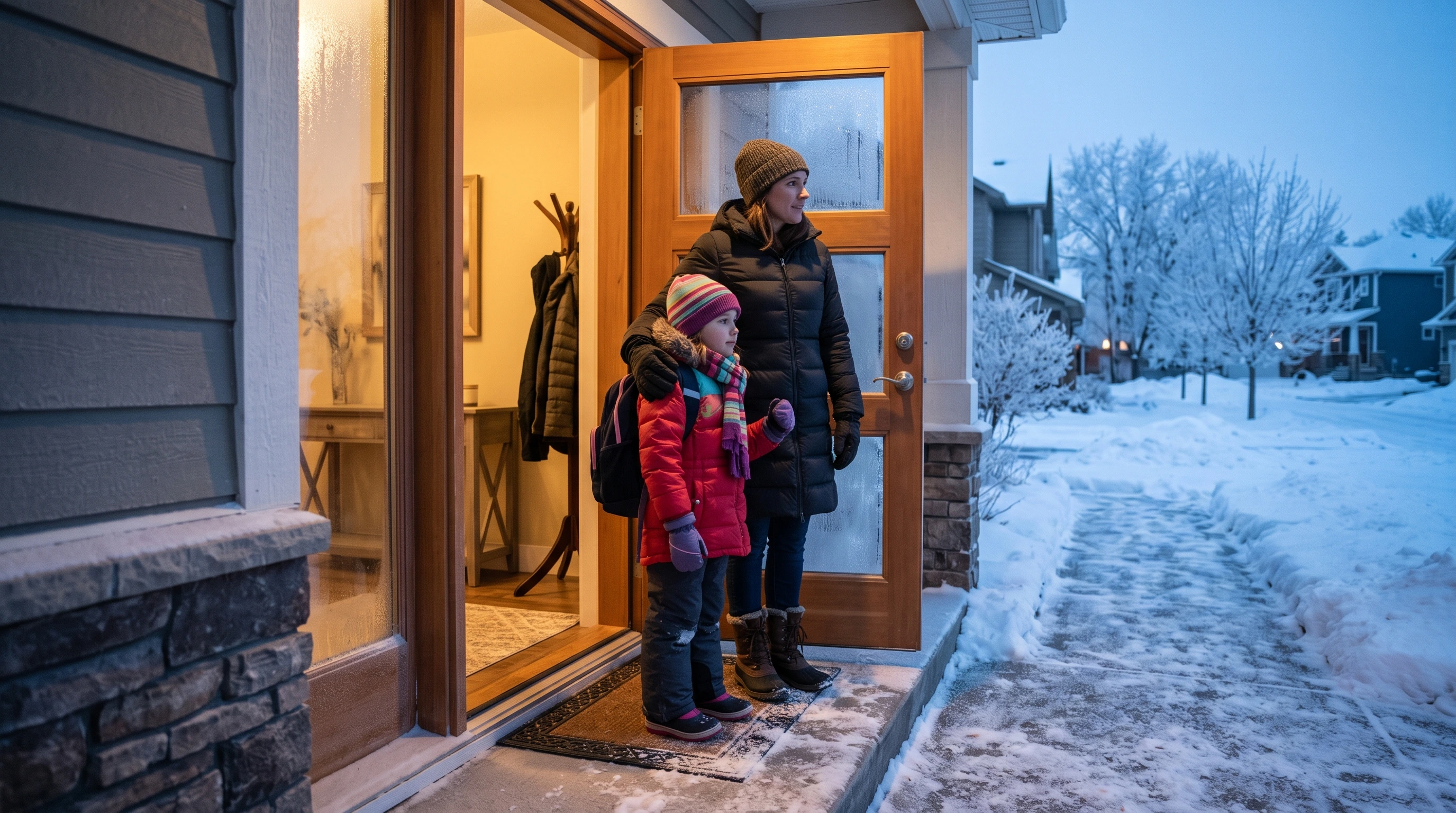
What Happens If Power Goes Out During the School Day?
Staff follow the school’s emergency procedures and assess whether students can remain safely. Early dismissal is one possible response, not an instruction for students to leave on their own.
British Columbia’s Kootenay Lake School District 8 emergency manual calls for accounting for students, checking the outage’s cause and anticipated duration, and contacting maintenance. It distinguishes severe weather, when staying inside may be appropriate, from an electrical hazard that may require evacuation.
The same manual’s early-dismissal procedures consider supervision and safe travel. Families should follow their own school’s pickup or reunification instructions, including the named location and authorized collection arrangements. Do not assume that an outage means immediate pickup or that the usual bus schedule still applies.
Can Schools Reopen After Power Is Restored?
They can reopen when the school is ready to operate safely, which may be later than electrical restoration. The CDC’s school recovery guidance calls for assessing the situation and reopening as soon as it is safe.
A practical readiness review may include the following, depending on the incident and local procedures:
- Heat and ventilation are operating, with suitable indoor conditions.
- Water, toilets, lighting and essential safety arrangements are usable.
- Damage has been assessed and any unsafe areas addressed.
- Communication, student support and meal arrangements are ready.
- Entrances, walkways and transport routes can be used safely.
This list combines the operational considerations above; it is not a universal inspection requirement. For a family deciding whether to leave home, the final step is still an updated school announcement.
BC Hydro explains that restoration involves assessment, repair and testing, and that estimates can change. Treat an estimated restoration time as a planning update, not a promise of the school’s opening time.
Who Decides Whether Schools Close During a Power Outage?
The authorized school or district leadership makes the school decision under local procedures. Facilities teams, utilities and relevant public safety officials provide information about the building, electrical service and surrounding hazards.
Seattle, for example, assigns changes in school hours to its superintendent or designee. Kootenay Lake’s manual requires administrators considering early dismissal to consult the school board office. These examples show why families should use their own district’s process rather than another district’s timetable.
How to Check Whether Your School Is Closed
- Check the official district or school website. Match the school name, calendar date and latest update time.
- Read school notifications. Check the school app, email, text or recorded phone message, using the channels your district identifies.
- Check official social accounts and emergency announcements. Use accounts linked by the district. Avoid relying on an undated screenshot shared by someone else.
- Read the exact status. A delay, bus cancellation, early dismissal and full closure mean different things. Look for after-school instructions too.
- Use utility updates for electrical context. Then return to the school’s channels for attendance and reopening instructions.
If messages conflict or communications are interrupted, use the district’s published alternative contact route. An outage map or a neighbour’s report is not a substitute for the school’s decision. Ontario families can also use our guide to school-board notices and bus cancellations.
Plan for the weather, then confirm with your school
Enter your city, ZIP or postal code, or choose “Use My Location,” to check a weather-based snow day estimate. The percentage is a planning aid. It does not monitor your school’s electricity, certify building readiness or announce a closure.
Check your snow day predictionRead our calculator data sources and methodology to understand what the prediction uses and where its limits lie.
Frequently Asked Questions
Does a power outage at home mean my school is closed?
No. A household outage does not establish conditions at the school. Check the school’s notice and contact it about any attendance or access problem affecting your family.
Can schools close because there is no water?
Yes. If safe drinking water and usable bathrooms cannot be provided, a closure or other arrangement may be necessary. Whether approved alternatives are available is part of the local decision; bottled drinking water alone does not resolve every sanitation issue.
How long can a school stay open without electricity?
There is no universal time limit. The answer depends on essential services, indoor conditions, backup capabilities and local requirements. Do not turn a utility’s repair estimate into a school closure deadline.
Can an electricity shortage close school even without a storm?
An actual interruption or restriction that prevents safe operation can affect school opening. A supply warning alone is not a closure notice. Follow the utility’s information and the school’s specific instructions.
Will classes automatically switch to remote learning?
Do not assume so. Check the district’s announcement for the learning arrangement and any work to complete. If your household cannot access online work because electricity or internet is unavailable, tell the school through an available channel.
Sources and Editorial Notes
Sources checked November 3, 2026. This guide uses official safety guidance, named districts’ procedures and one documented storm example. Local examples describe those districts; the general explanations and planning checklist do not replace your school’s emergency policy.
- California Department of Education — School Closure Considerations: operational questions for public safety power shutoffs.
- Seattle Public Schools — Safety FAQ: outages and authority to change school hours.
- Boulder Valley School District — Weather Delays and Closures: outage impacts and backup-power limitations.
- Kootenay Lake SD8 — Emergency Preparedness Manual (PDF): 2025 version, printed pages 30–31, early dismissal and power outages.
- National Weather Service — After a Winter Storm: lingering hazards and safe access.
- Government of Alberta — Power Outages: outage causes, effects and grid alerts.
- BC Hydro — How Power Is Restored: restoration stages and changing estimates.
- CDC — After a School Emergency: October 28, 2024, recovery and safe reopening.
- Beaverton School Board — April 30, 2024 meeting packet (PDF): page 80, January 2024 ice-storm closures.