A freezing morning creates two separate questions: can the bus complete its route, and can your child reach it without unnecessary cold exposure? Knowing the temperature helps, but it does not answer either question by itself.
Start with your child's route number, the operator's cold-weather policy, and the latest service update.
Why there is no single school bus temperature cutoff
A school bus cold weather policy is an operating decision for a particular service. It is not a universal test of whether every bus engine can start or every child can safely wait outdoors.
Read the policy's details as carefully as its headline temperature. Does it use measured air temperature, forecast wind chill, or both? Does it name a weather station and decision time? Does cancellation cover one route, a transportation zone, or the entire service?
A screenshot of a temperature threshold without those details can be misleading. It may come from another district, another school year, or a policy about outdoor recess rather than transportation.
Two verified Canadian policy examples
These examples show how specific local instructions can be. They apply to the named services, not to all Canadian, US, or UK school buses. Follow the current notice for your own route.
| Jurisdiction and official source | Published cold-weather criteria | Detail families should notice |
|---|---|---|
| Calgary Board of Education, Alberta, Canada — transportation weather advisory | The page lists ambient temperature of −35°C (−31°F) and wind chill of −40 (equivalent to −40°C/−40°F) under its cancellation criteria, using Environment Canada readings. | A final decision is due by 5:15 a.m., with communication by 6 a.m. Schools remain open unless otherwise announced. |
| Winnipeg, Manitoba, Canada — Winnipeg School Division's published notice | The notice says school bus transportation for Winnipeg's school divisions is cancelled when wind chill reaches −45 (equivalent to −45°C/−49°F) by 6:15 a.m., using Environment Canada's reading at The Forks. | When buses are cancelled in the morning, service does not resume later that day even if conditions improve. |
All times above are local. These are transportation criteria, not temperatures at which a bus necessarily breaks down. They are also not assurances that outdoor waiting is safe at warmer readings.
The measurement, reporting time, and consequences matter together. For Calgary, follow the board's announcement rather than inferring a cancellation from the two listed criteria.
Wind chill and school buses: separate the child from the vehicle
Actual temperature and wind chill answer different questions
Air temperature is the thermometer reading. Wind chill describes how cold conditions feel because moving air increases heat loss from exposed skin.
For vehicles, wind can speed cooling toward the surrounding air temperature; the wind-chill number does not make the vehicle colder than that air. The National Weather Service's wind-chill explanation makes this distinction explicitly.
Outdoor exposure needs its own plan
A child who can wait in a supervised warm place faces a different situation from one standing beside an open road. Clothing, wetness, wind exposure, and time outside all matter. Environment and Climate Change Canada explains how wind and wet skin increase heat loss in its wind-chill guidance.
Do not turn a frostbite chart into a countdown for how long your child may wait. NWS notes that wind-chill testing used adults and advises additional caution with children. It does not establish an individually safe waiting time. NWS guidance on children and wind chill.
Arrange a warm fallback location and supervising adult beforehand. Make sure your child knows how to contact you if pickup fails.
Vehicle readiness involves more than starting the engine
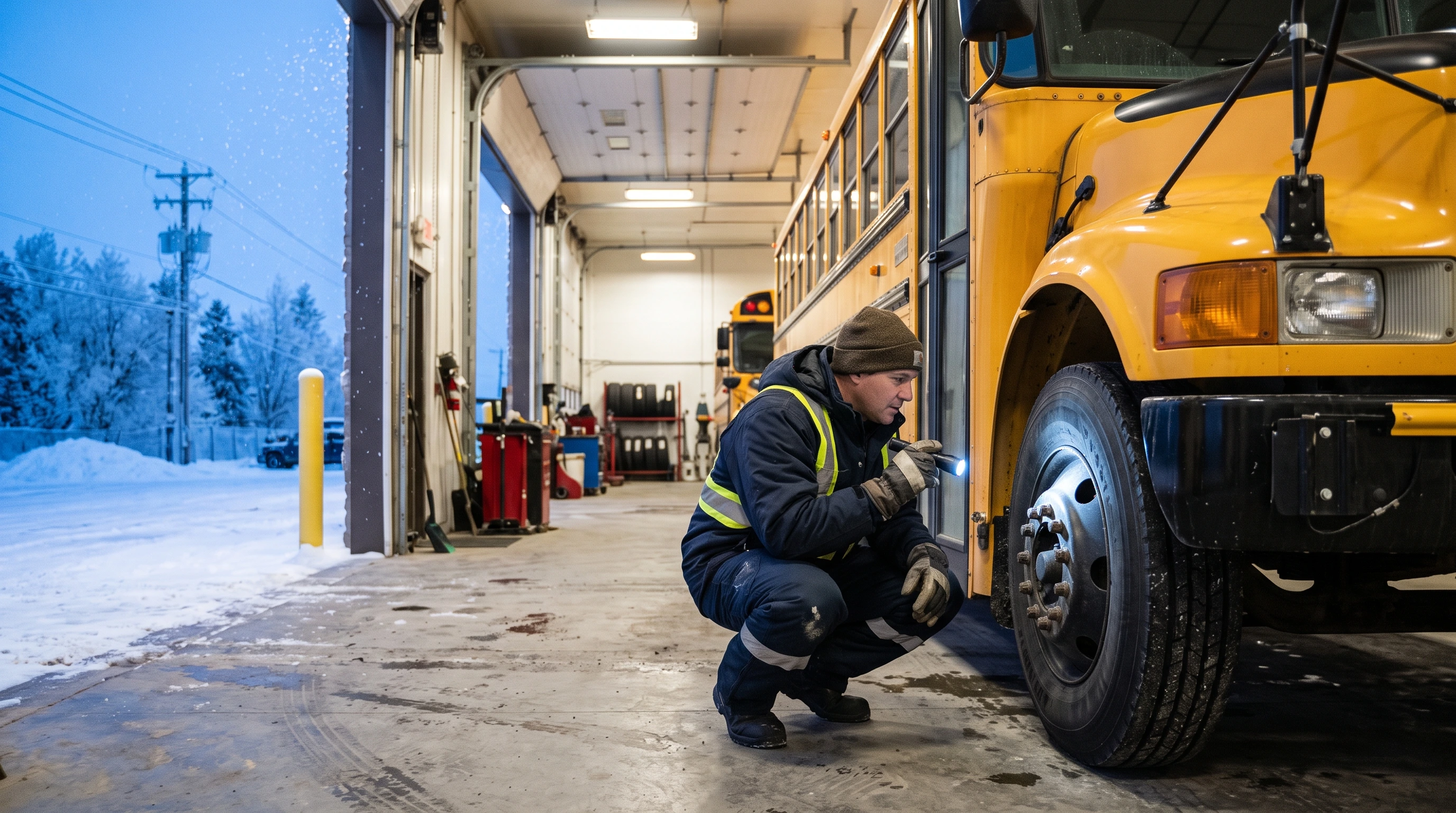
Cold reduces battery power, while gasoline and diesel engines require more battery power to start. Electric vehicles can also lose driving range in cold weather. NHTSA identifies these effects and recommends checking batteries, charging systems, coolant, and defrosters in its winter vehicle guidance.
These effects do not establish a universal bus-failure temperature. Check the operator's service assessment and replacement-bus arrangements instead of diagnosing the fleet from an app.
A running bus can still encounter a problem later. Calgary's transportation guidance specifically warns that buses can cool quickly after mechanical trouble. Children therefore need appropriate outdoor clothing even when the plan is a short walk followed by a heated ride. CBE cold-weather travel advice.
The entire route matters
Snow and ice make stopping and controlling a vehicle harder, as NHTSA explains. Your clear driveway does not establish conditions at every pickup point, hill, or school entrance along the route.
For broader snow and ice context, see how weather conditions affect school cancellations. For this morning's bus, the useful question is whether your assigned route has been delayed, changed, or cancelled.
Does a bus cancellation mean school is closed?
No. Calgary's published policy, for example, says schools remain open when transportation is cancelled unless families are told otherwise. CBE cancellation policy.
Read both the transportation update and the school announcement. Before arranging another journey, establish whether the building is open, what attendance or learning instructions apply, and how your child would get home.
A school remaining open is not an instruction to attempt a journey you consider unsafe. Contact the school about your circumstances and its absence-reporting procedure. Do not assume another board's attendance policy applies.
The Ontario school-disruption guide provides broader regional context. For this morning, confirm the bus service, school status, and return arrangement separately.
Read the Ontario guide →The practical playbook: your morning bus checklist
☑ Before the morning pickup
-
1. Open the correct official channels
Start with your district, school board, or transportation provider's website or approved notification app. Match the route number, school, travel direction, and date. Check whether the message affects your whole area or only particular services.
For US families, begin with the district and its transportation office. In Canada, check the board and any separate transportation consortium or operator serving your child.
In the UK, check your school and transport provider's updates; council-arranged transport may have its own notices. The GOV.UK school-closure finder directs families in England and Wales to their local council. A school-closure listing alone does not confirm an individual bus journey.
-
2. Check conditions at pickup time
Look at the forecast for when your child must leave home, not only the afternoon high. Check the walk to the stop, likely outdoor waiting, and the afternoon return window.
Use the National Weather Service in the US, Environment and Climate Change Canada in Canada, or the Met Office in the UK for official weather information. Match the location and time to your journey.
-
3. Read the latest message in full
Check its timestamp and any promised update time. A message saying a decision is pending does not confirm normal service. Look for changes to pickup points, accessibility arrangements, or return trips as well as the cancellation headline.
If messages conflict, contact the transportation office or school using its published details. Tell staff which route and dated notices you are comparing. A forwarded screenshot without its original date is a poor basis for sending a child outside.
-
4. Put the warm waiting plan into action
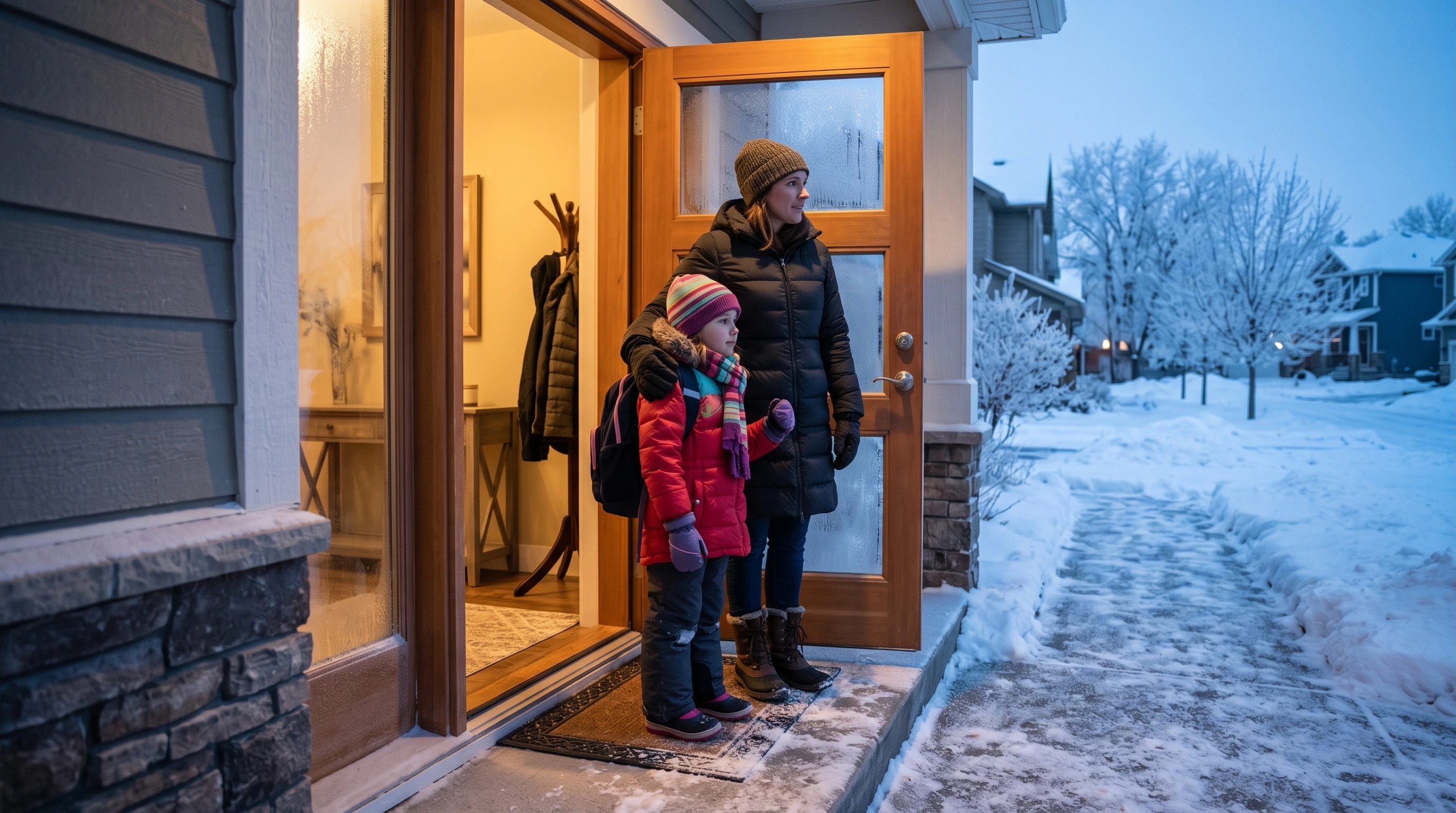
The NWS cold-weather preparation guide recommends finding a warm place for children waiting for a school bus. Coordinate that arrangement with the operator's pickup instructions so your child can board without rushing across traffic or waiting unnecessarily in the cold.
Choose the supervising adult, backup contact, and indoor location beforehand. If your child needs assistance with mobility, communication, or boarding, discuss those arrangements with the transportation team before the weather deteriorates.
-
5. If the bus is delayed, reassess immediately
Use the approved service tracker or contact the operator for an update. Do not keep a child outside simply because the normal pickup time has passed. Move to the agreed warm location when needed and tell the operator if you are leaving the stop.
Dress in layers, protect exposed skin, and replace wet clothing. Numbness or unusually pale or waxy skin needs prompt attention; move indoors and seek medical advice for suspected cold injury. NWS cold-exposure guidance.
-
6. Confirm the journey home
If you take your child to an open school yourself, ask whether afternoon transportation will operate before assuming there will be a bus home. Winnipeg's published all-day cancellation rule illustrates why improving weather alone does not settle that question.
Tell the school who will collect your child and follow its normal pickup procedures. Keep notifications enabled in case arrangements change during the day.
Three hypothetical mornings, three different decisions
These are illustrations, not forecasts, observed cases, or safety guarantees.
Clear roads, but an exposed stop
A provider cancels transportation under its local cold policy even though roads are clear. The concern is the planned journey, including outdoor exposure. The family checks the school's separate status and arranges supervision instead of assuming a snow-free road means the bus must run.
School is open, but one vehicle is delayed
The morning announcement says school is open. Later, the operator reports a mechanical delay on the child's route. The parent uses the agreed indoor waiting location and checks for a replacement-bus update. The original school announcement does not resolve this new transportation problem.
Conditions improve after a cancellation
A parent sees brighter weather and considers driving a child to school. Before leaving, they confirm that school is accepting students and establish the afternoon pickup plan. They do not assume the cancelled bus service will restart because the forecast has improved.
Frequently asked questions
Does an extreme-cold weather alert automatically cancel buses?
An alert describes a weather hazard. Treat it as a reason to check your operator's policy and current announcement. It is not, by itself, a route-status message. Local policies may use particular measurements, stations, or decision times.
Should I use the temperature at home or the policy's weather station?
Use the measurement specified by the policy when interpreting its criteria. A home thermometer or app may show a different location or observation time. Still consider conditions at your child's actual stop when planning outdoor exposure.
Does an indoor-recess rule also apply to bus stops?
Do not assume so. Recess and transportation can have separate procedures. Find the policy specifically covering buses, and ask the school if its public guidance does not explain waiting arrangements or cold-related delays.
Should I call the driver if the bus does not arrive?
Use the contact method your transportation provider has designated. That may be a dispatch office, school, or approved app. Have the route number, stop, and scheduled pickup time ready; do not rely on reaching a driver who may be driving.
What if my child needs additional support in cold weather?
Speak with the school and transportation team about a practical plan for boarding, supervision, delayed service, and access to warmth. Where a health condition changes cold-exposure needs, involve your child's clinician. A general cancellation threshold cannot assess an individual child's needs.
Before your child leaves home
Plan for possible school disruption
Use the Snow Day Calculation homepage tool as an experimental, weather-based estimate of school-disruption risk.
Check the weather-based estimate →References & Sources
- Calgary Board of Education — Using Transportation in Cold Weather
- Winnipeg School Division — Bus and School Cancellation Information
- National Weather Service — Understanding Wind Chill
- Environment and Climate Change Canada — Wind Chill and the Wind Chill Index
- NHTSA — Winter Weather Driving Tips
- National Weather Service — Prepare for Cold Weather
- National Weather Service — During Extremely Cold Weather
- GOV.UK — School Closures in England and Wales